Every winter, I find myself reaching for the same boring sweater-and-leggings combo just to stay warm and comfortable. Sound familiar? This year, I decided to break that cycle by creating what I called my "practical glamour" winter capsule — clothing that's cozy and wearable but still makes me feel like I have that spark of winter elegance.
I sat down, planned out my projects, and gathered my fabrics. I was ready to go. But here's the thing about sewing plans: they're meant to be guides, not strict rules. Along the way, I made some unexpected pivots that taught me valuable lessons about following my instincts and creating clothes I truly love to wear.
Let me walk you through the five projects that shaped my winter wardrobe this year, including luxurious striped pajamas I've been living in, a knit mini skirt with handmade button details, and a last-minute project that completely replaced something else I had planned.
Project 1: Classic Striped Pajamas That Actually Last
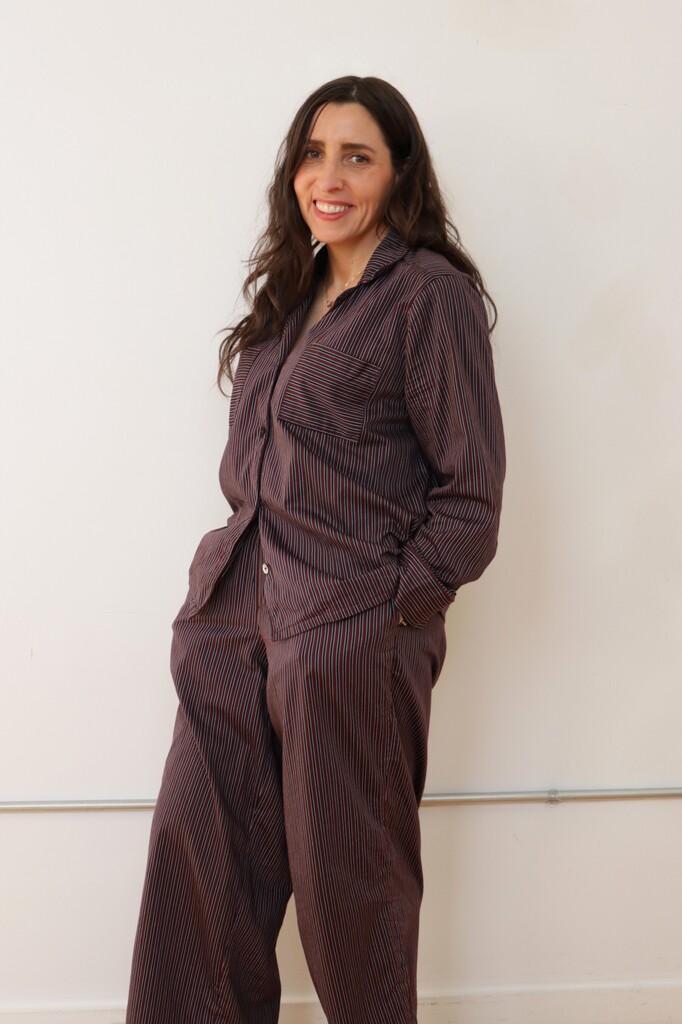
My first project was a pair of classic striped pajamas using the Seamwork Leif pattern. Now, I'll be honest — I put off making pajamas for the longest time because it didn't seem that exciting. Plus, they use a lot of fabric, so a nice pair can get expensive.
But here's what I realized: the cost per wear is incredibly low. I literally wear pajamas every single day, and knowing how much thought and love I put into them makes putting them on each night feel really special.
Why the Leif Pattern Works Perfectly
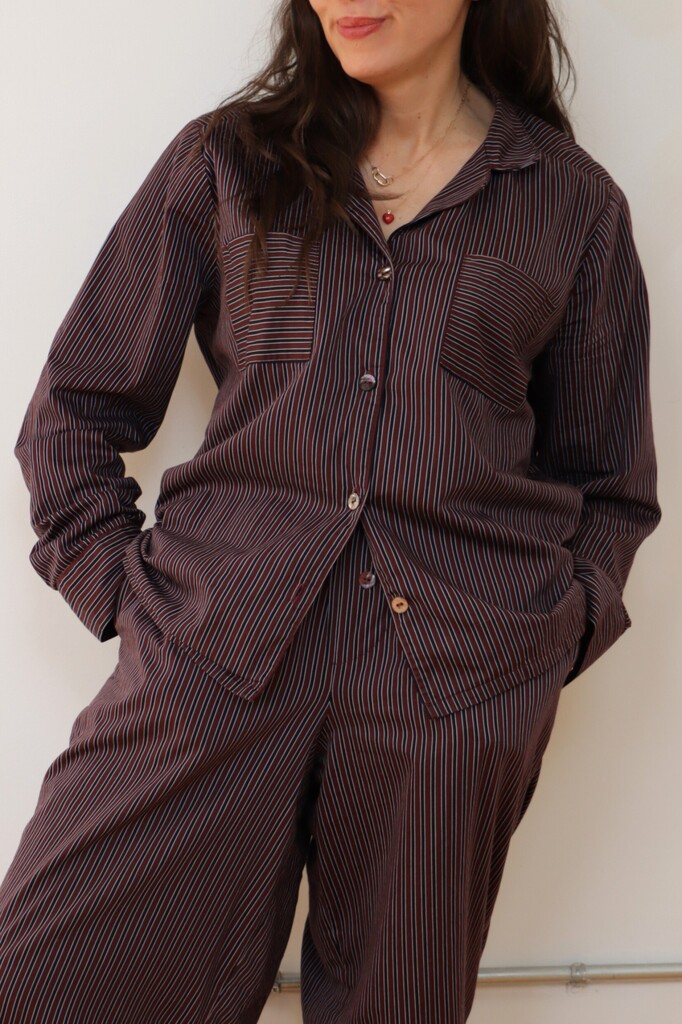
Leif is a classic woven pajama set with a relaxed, gender-neutral fit. The button-up top has a straight, easygoing silhouette with a curved notch collar, long sleeves finished with cuffs, and two chest pockets (perfect for storing bedtime snacks for the dogs — we call them "pocket cookies" in our house).
The bottoms feature a mid-rise cut with a relaxed, straight fit, finished with cuffs at the hem that echo the sleeves. There are in-seam pockets that attach neatly to the waistband, plus a cool faux fly with a button detail at the front.
Fabric Choice Makes All the Difference
While discussing this project on the Seamwork Radio podcast, I mentioned I was looking for shirting in darker navy and maroon stripes. Haley actually texted me from a fabric store because she'd found the perfect fabric — a classic cotton shirting with a silky hand that feels luxurious against the skin.
The colors were ideal: dark brownish-red and navy that won't show stains like my old pajamas did. Since the fabric has vertical stripes, I cut certain pieces like the cuffs and waistband on the cross grain so the stripes on those areas run horizontally. I also matched the vertical stripes at the shoulder seams, which really elevates the whole look.
My Secret for Perfect Collar Points
When it came time to turn the collar, I used my favorite technique for getting really sharp points:
- After sewing a corner, turn each seam allowance to the wrong side and press
- Use angled tweezers (locking ones are especially helpful) to grab the corner of the seam allowances
- Turn the fabric around the tweezers — the point will help create a sharp corner
- Give it a final press and you're done
For the buttons, I chose brownish shell buttons with a slightly purple sheen that picks up the tones in the fabric beautifully. The result? Pajamas so luxurious I'm happy to wear them for morning coffee or quick trips outside with the dogs.
Key Lesson: Don't underestimate everyday essentials. The pieces you wear most deserve the same care and attention as special occasion garments.
Project 2: A Knit Mini Skirt with Handmade Button Details
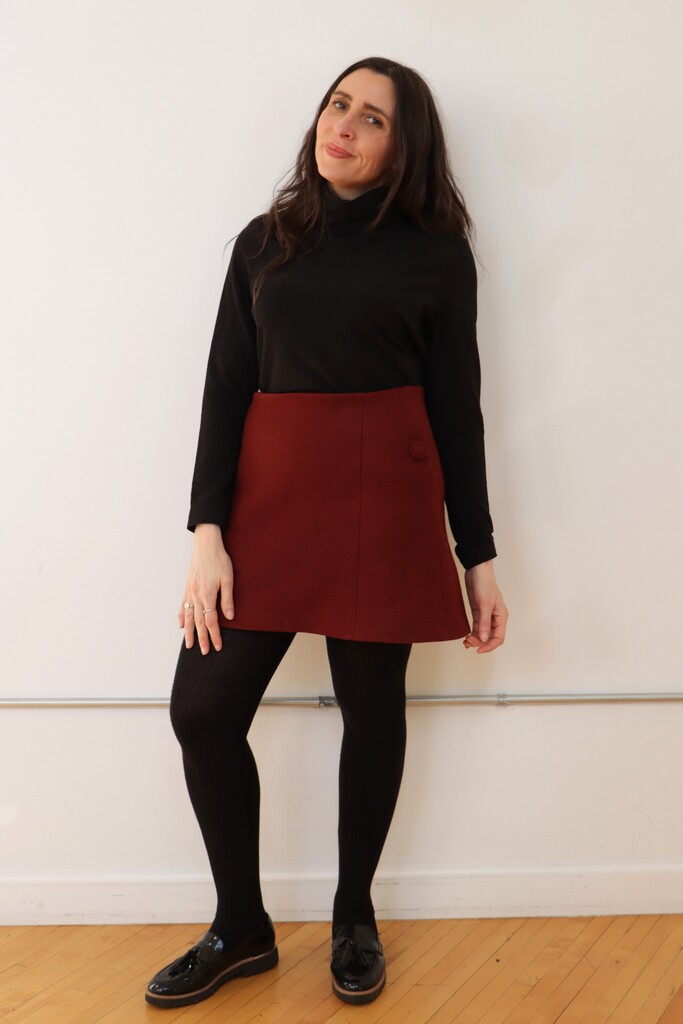
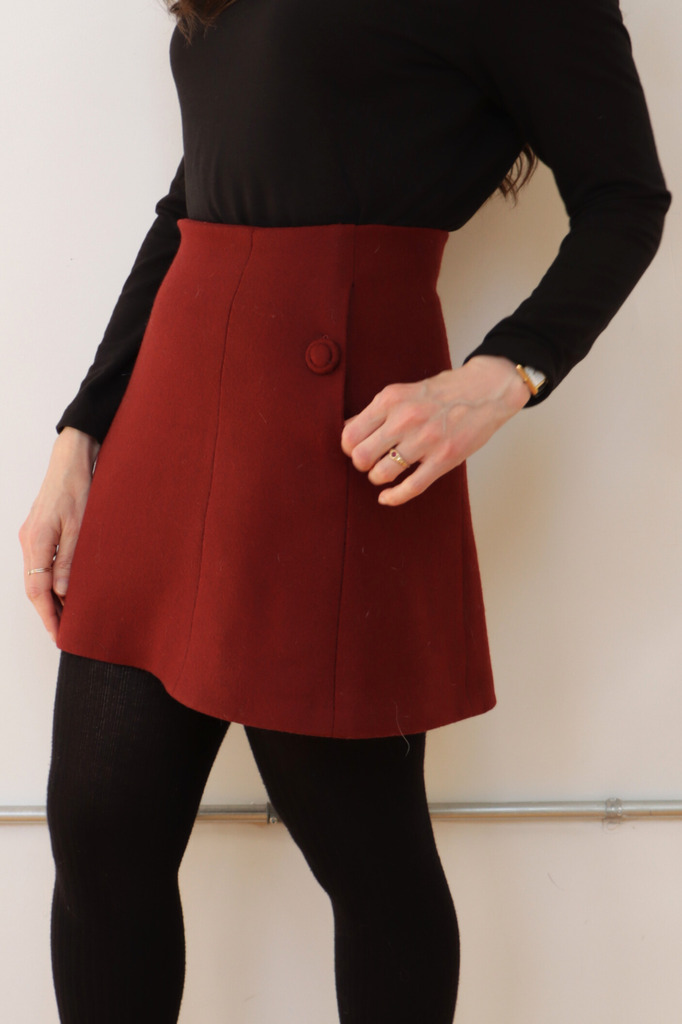
Next up is a knit mini skirt using the Seamwork Orla pattern. Orla is designed as a chic A-line mini that sits at your natural waist, with princess seam panels and inseam pockets with button closure. It's typically made in woven fabrics, but I decided to experiment with a stable knit.
Why I Chose Knit Over Woven
I have a knit mini skirt that I wear constantly because it's so comfortable. Even though Orla is designed for wovens, I wanted to recreate that same comfort level in a more structured silhouette. I used a heavy wool knit from Surge Fabric Shop in this gorgeous burgundy color that practically glows.
For construction, I used fusible knit interfacing that stretches with the fabric. The lining is a soft pink stretch silk charmeuse from my stash — it prevents the skirt from sticking to tights while still stretching with the outer fabric. I made sure to cut all lining pieces facing the same direction since satin fabrics have a nap.
Creating Heirloom-Quality Buttons
Here's where things got really special. For the pocket buttons, I wanted something unique, so I pulled out a thrift store find — a book about making heirloom buttons with crochet, needle lace, fabric, and ribbon. I decided to try a "Singleton button," where you cover a small plastic ring and stitch around the edge.
These handmade buttons create a beautiful tailored look similar to ones I've seen on high-end vintage garments. The process isn't difficult, but it adds such a luxurious, custom detail that really elevates the entire project.
Key Lesson: Learning new techniques, even small ones like button-making, can transform a simple project into something truly special. Don't be afraid to try unfamiliar details that catch your interest.
Project 3: The Sweater Dress That Embraced Color
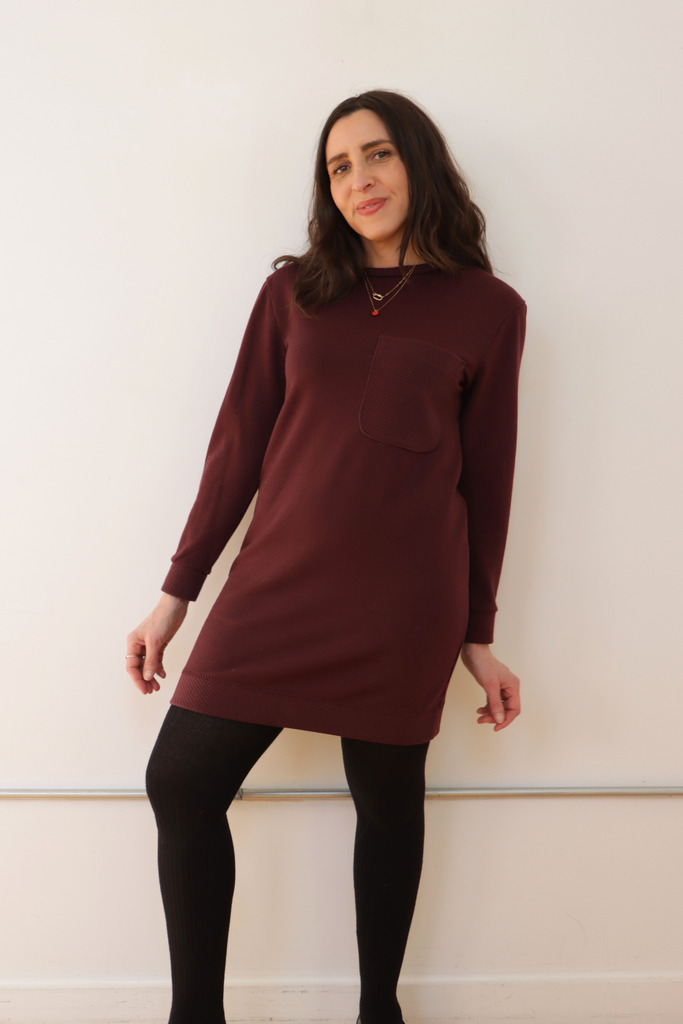
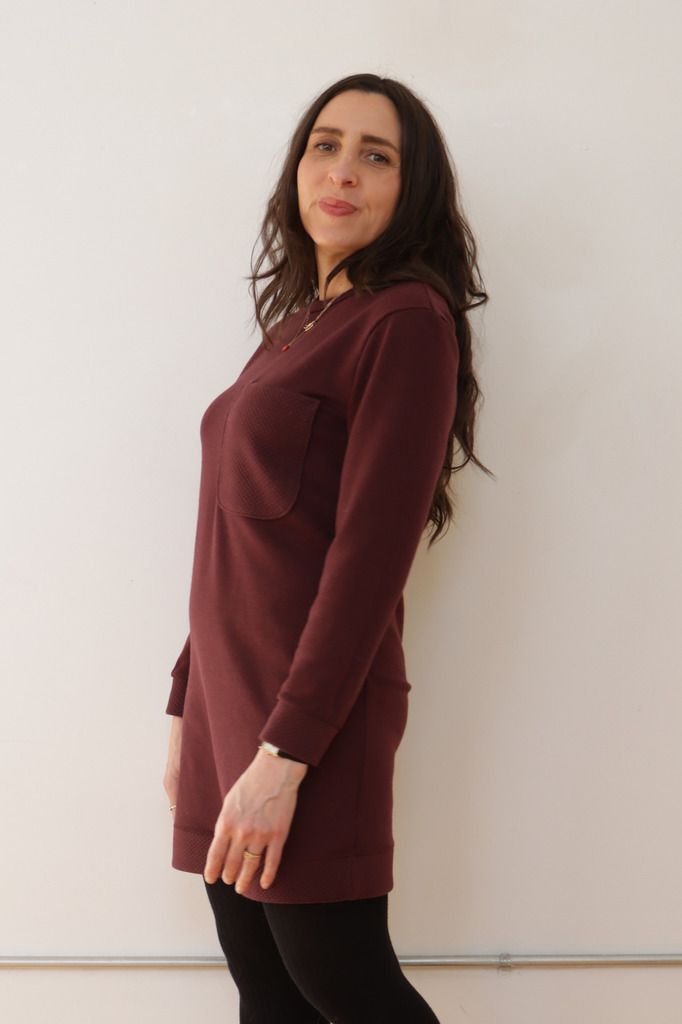
This sweater dress started as the Seamwork Skipper pattern — actually a sweatshirt design that I lengthened into a dress. Skipper is a modern take on the classic sweatshirt with a slightly dropped shoulder and patch pocket.
Working with Unexpected Colors
I used a fleece-backed knit in deep raisin purple. I normally don't wear much purple, but this shade spoke to me, and I'm so glad I followed that instinct. It's surprisingly versatile and goes with many other colors I love.
I paired it with a quilted knit that matched perfectly (I honestly can't remember if I bought them together, but they were meant to be). I used the quilted fabric for the cuffs, hem band, and that distinctive patch pocket.
Construction Details That Matter
A few key techniques made this dress both professional-looking and comfortable:
- I reinforced the shoulder seams with strips of knit interfacing to prevent stretching
- Used a walking foot for the chest pocket application
- Installed sleeves flat (my preferred method for knits)
- Applied Wonder Tape for clean neckband and hem installation
The dress sews up incredibly quickly and has become my go-to for working from home. I love wearing it with black or brown tights and layering on gold jewelry when I want to dress it up.
Key Lesson: Don't be afraid to experiment with colors outside your usual palette. Sometimes a fabric speaks to you for a reason, and following those instincts can expand your wardrobe in wonderful ways.
Project 4: The One-Hour Wonder Tee
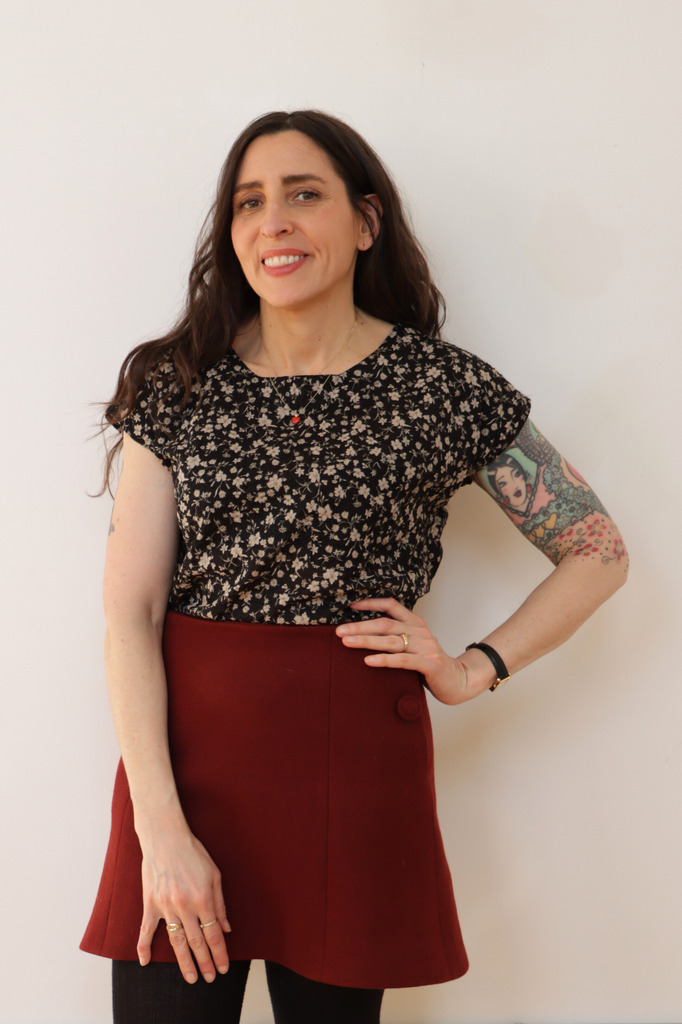
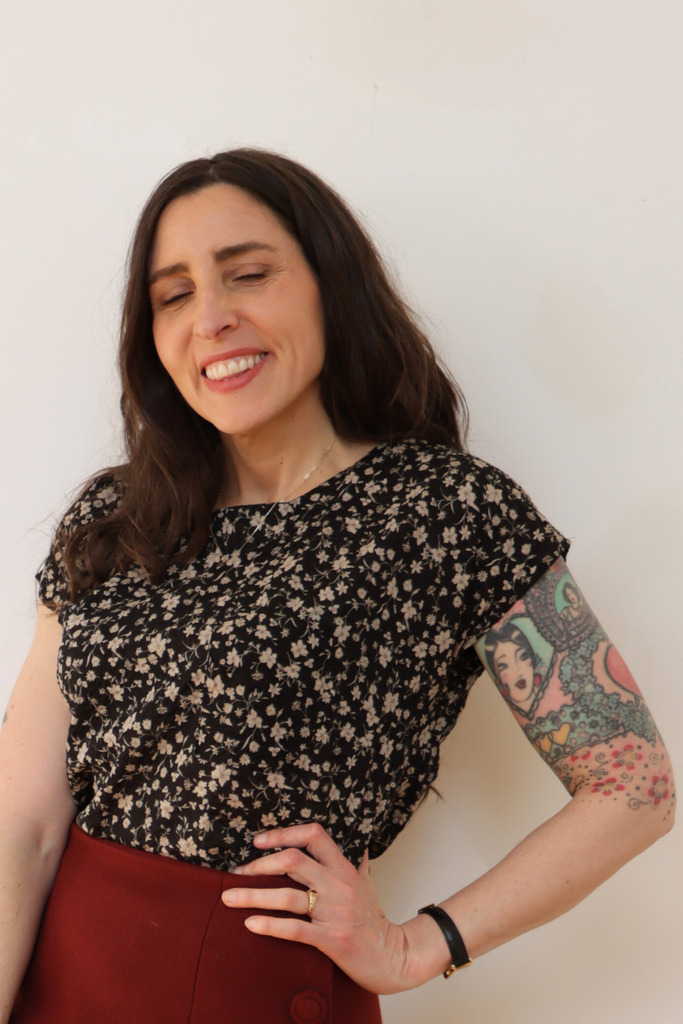
Sometimes you need a project that delivers instant gratification. Enter this floral woven tee using the Seamwork Hansie pattern — and the best part? It's completely free!
When Plans Change (And That's Okay)
Originally, I planned to make this in beautiful black rayon velvet for a luxe winter look. But after the holidays, I wasn't feeling the velvet mood anymore. Instead, I grabbed this black cotton gauze with tan flowers from my stash (originally from Blackbird Fabrics) — sometimes you need something lighter, even in the depths of winter.
Four Time-Saving Tips for Quick Projects
Here are the techniques I used to complete this top in under an hour:
- Print the instruction table of contents to use as a checklist — it helps you track progress, especially when sewing in short bursts
- Label confusing pieces immediately so you can identify them at a glance
- Interface fabric first, then cut pieces rather than cutting tiny interfacing pieces separately
- Use Wonder Tape for basting pockets and other details — it washes away and makes everything easier
This simple top pairs beautifully with cardigans and can even layer over turtlenecks for extra warmth as we transition into spring.
Key Lesson: Having quick, satisfying projects in your back pocket is invaluable. They're perfect for stash-busting and give you that accomplished feeling when you need a sewing win.
Project 5: Secret Pajama Pants That Look Like Real Trousers
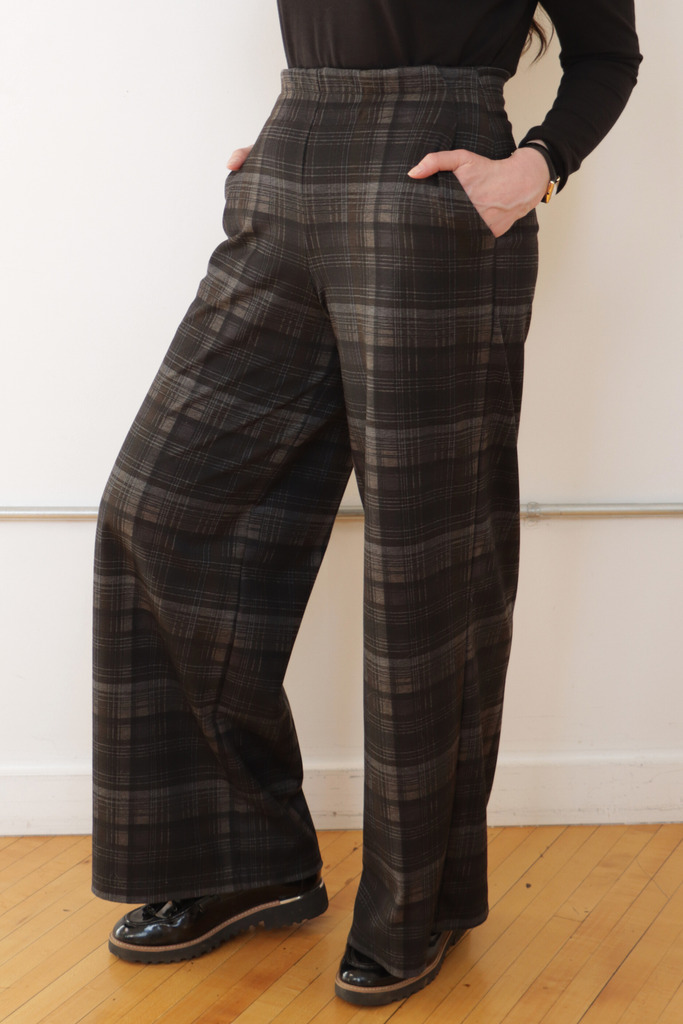
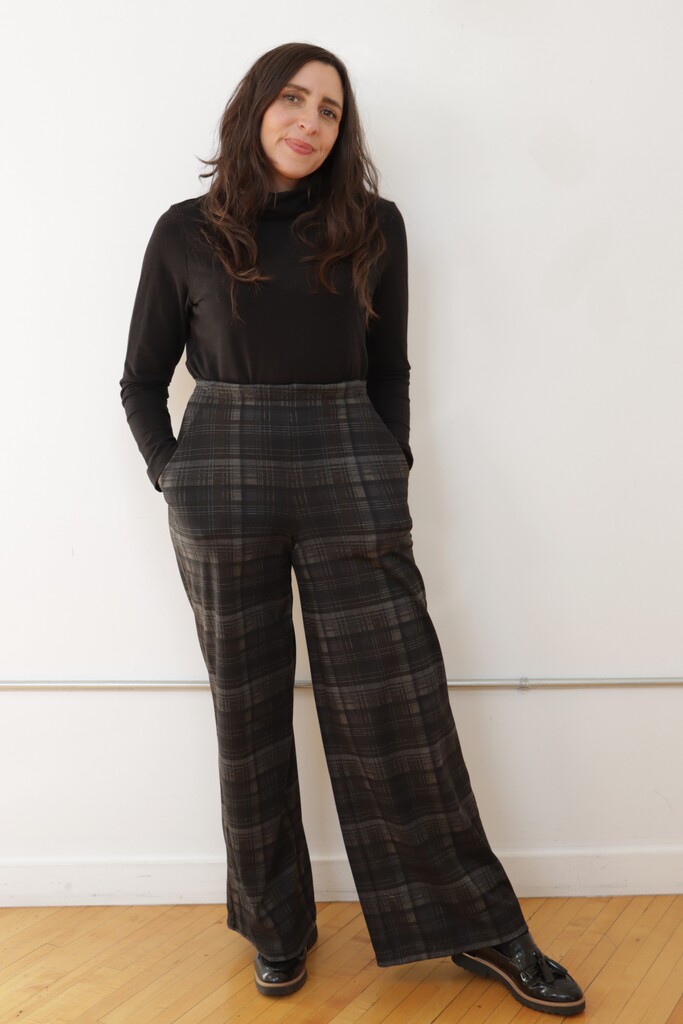
My final project completely replaced the faux fur coat I had originally planned. These knit trousers use the Seamwork Palmer pattern and perfectly embody the "secret pajama" concept.
When Your Mood Shifts (And How to Roll with It)
I had beautiful black faux rabbit fabric and silk jacquard lining ready for that coat. But just like with the velvet top, I realized I wasn't in the mood for something so dramatic after New Year's. Instead of forcing the plan, I went with my instincts.
The Magic of Palmer Pants
Palmer pants feature a high-rise fit, faced elastic waistband, and handy slash pockets. They look like proper trousers but feel like yoga pants. I used a ponte knit from Surge Fabric Shop in black, charcoal, and chestnut brown — a viscose/nylon blend that's breathable and comfortable.
Plaid Matching Techniques
To ensure the plaid matched at the side seams, I:
- Drew match lines across both front and back pattern pieces
- Clipped selvages together, carefully matching the plaid pattern
- Added clear elastic to pocket openings to prevent stretching over time
- Used a three-step zigzag for understitching to maintain stretch
The result? Pants that look polished enough for video calls but feel comfortable enough for all-day wear.
Key Lesson: Plans are guides, not rules. When your mood or needs shift, it's perfectly fine to pivot. The clothes you're excited to make are the ones you'll actually love to wear.
Building Your Own Seasonal Capsule
Creating this winter wardrobe taught me that the best seasonal sewing combines practical planning with intuitive flexibility. Start with a theme or vision (like my "practical glamour"), choose versatile patterns that work with your lifestyle, and don't be afraid to deviate when your instincts tell you to.
The key is selecting projects that genuinely excite you in the moment — those are the pieces you'll reach for again and again, making every minute spent sewing worthwhile.
Whether you're planning your own seasonal capsule or just looking for your next project, remember that the best handmade wardrobe is one that truly reflects who you are and how you want to feel in your clothes.
 Related Articles
 Best Articles