Have you ever fallen in love with a gorgeous pattern, only to discover it's designed for woven fabrics when all you're craving is something soft and stretchy? You're not alone. I can't tell you how many times I've saved a pattern to my ever-growing wishlist, then realized I wanted the comfort and ease of knit fabric instead of the structure of a woven.
The good news? You absolutely can convert woven patterns for knit fabrics - but there are some crucial considerations that will make the difference between a successful project and a frustrating one. Today I'm walking you through exactly how to make this swap using the Seamwork Orla skirt as a real example, so you can confidently unlock more options from patterns you already own.
Why This Technique Opens Up Your Pattern Collection
I was wearing my favorite little knit mini skirt one day - you know the one, that perfect ponte piece that feels like leggings but looks completely put-together - when I realized how much I love knit skirts in winter. There's something magical about feeling dressed up while being as comfortable as if you're wearing your coziest loungewear.
When we released the Orla skirt, this gorgeous A-line mini that's fully lined, I immediately wondered: could I make a comfy version in knit fabric instead of the intended woven? The answer is absolutely yes, but there were a few important considerations I had to work through first.
Consideration #1: Reading Your Pattern's Knit-Conversion Potential
Some patterns practically beg to be made in knits, while others will leave you frustrated and wondering why you even tried. The secret is learning to read the pattern clues before you commit.
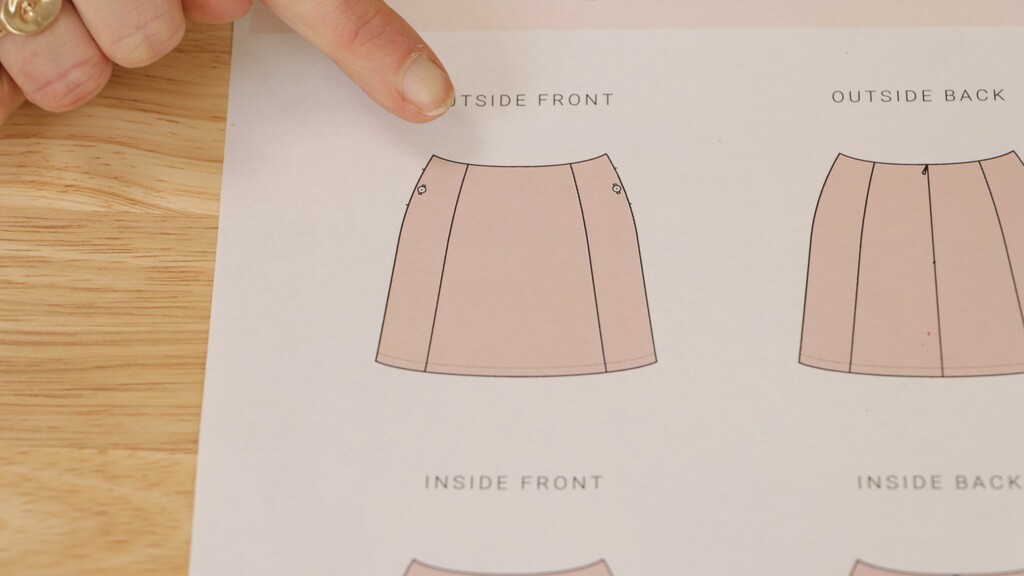
When examining any pattern for this swap, the technical illustration becomes your roadmap. Think of it like a puzzle - the fewer pieces you have, the easier it is to put together. Fewer seams equal easier translation to knits, so look for simple construction lines and streamlined shapes.
The Orla immediately caught my attention because of its princess seams. These are actually your best friend when working with knits because they follow the natural curves of your body, and knit fabric loves to curve right along with you. Compare that to darts - depending on their placement, you might fold them out of the pattern entirely or skip them altogether since knit fabric naturally conforms to your shape.
Patterns with minimal fitting details, clean lines, and straightforward construction will give you the best success rate when making this conversion.
Consideration #2: Understanding the Ease and Stretch Relationship
Here's where things get interesting, and it's something that trips up a lot of sewists - the relationship between ease and stretch. You need to think like your knit fabric instead of like the woven the pattern was designed for.
Woven patterns have ease built in for movement since the fabric doesn't stretch. Knit fabrics create ease through their natural stretch. When you combine both types of ease, you get way more room than you actually need for comfort - think oversized sweatshirt when you wanted fitted tee.
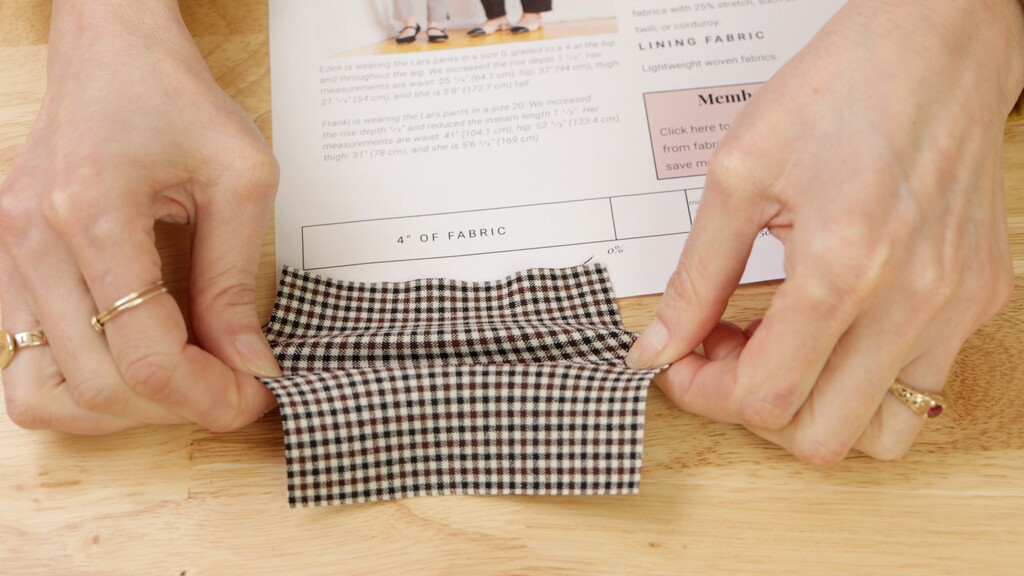
Here's my stretch test: grab your knit and stretch it both ways. More than 25% stretch? Size down one size. Less than 10% stretch? Stick with your usual size. This simple adjustment prevents that baggy, unflattering fit that makes you wonder why you bothered with the conversion in the first place.
Consideration #3: Rethinking Construction Details
Now let's talk about all those other details that make a garment work. Take closures, for instance - this is where knit conversions get really fun. The original Orla has a back zipper, which I opted to keep, but in some cases you may be able to completely omit closures and rely on the stretch to get in and out of the garment.
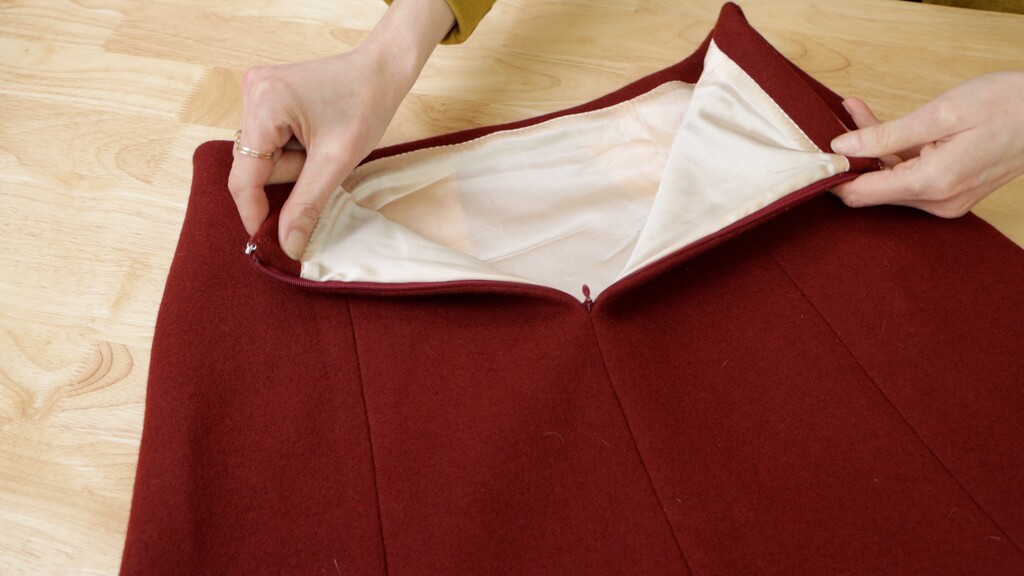
If you decide to keep closures like zippers, make sure your knit fabric is stable enough to handle it. Soft, slinky, or thin knits might not be able to support the weight of a zipper without puckering or stretching out of shape.
That lining is another decision point. Do you actually need it? For my Orla, I chose a stretch lining because it keeps the wool from sticking to my tights, but depending on your fabric choice, you might skip it entirely.
The faced waistband got some rethinking too. While the original instructions call for regular interfacing, I used knit interfacing instead. It provides structure while still allowing the natural give that makes knit garments so comfortable to wear.
Consideration #4: Choosing the Right Knit Fabric for Success
Stability is everything when you're swapping knits for wovens. You need a fabric with structure and good recovery - something that's going to hold its shape throughout the day, not grow two sizes larger by dinnertime.
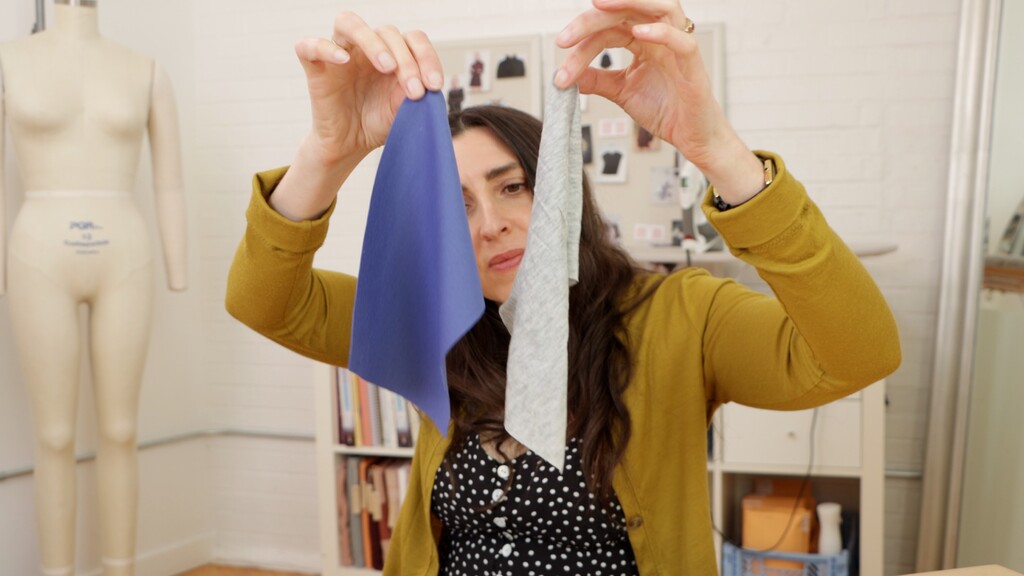
Here's my fabric stability test: hold a piece of your knit up and let it hang. Does it maintain its shape, or does it stretch out under its own weight? If it stretches significantly, don't use it for woven patterns. Good knits for woven pattern substitutions hold their shape beautifully.
Best Knit Fabrics for Woven Pattern Conversions:
Double knits are fantastic for this - they're stable, have great structure, and don't lose their shape. Ponte is another winner, especially for fitted garments like pants or skirts. Ponte is so stable that you can often sew it just like a woven fabric, making it the easiest knit to swap.
Heavy sweater knits work beautifully for looser silhouettes, while scuba knits offer that structured feel with modern stretch comfort.
Fabrics with some spandex or lycra content are essential. That elastic component helps the garment snap back into place rather than growing throughout the day. Avoid 100% cotton or 100% linen knits - they just don't have the recovery you need.
For my Orla skirt, I found a gorgeous wool double knit that had the structure I needed with all the comfort that made my original ready-to-wear skirt such a wardrobe staple.
Consideration #5: Adapting Your Construction Techniques
When working with knits in patterns designed for wovens, preventing stretching during sewing becomes critical. You'll want to reinforce key areas and adjust your techniques accordingly.
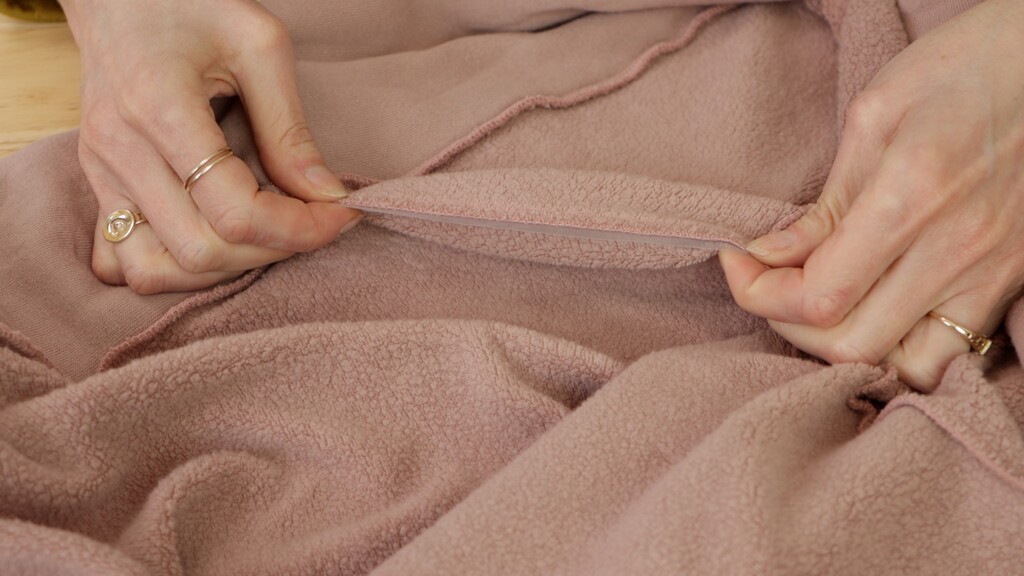
Reinforce key seams - especially shoulder seams, necklines, and waistbands. Clear elastic sewn into shoulder seams prevents that dreaded stretch-out that can ruin your garment's fit. Knit stay tape works beautifully too, maintaining stretch while adding stability.
Use the right stitches - If you're working with very stable knits like ponte, you can often sew them just like wovens. However, I prefer to stitch horizontal seams like waistbands with a narrow zigzag for a bit of stretch insurance.
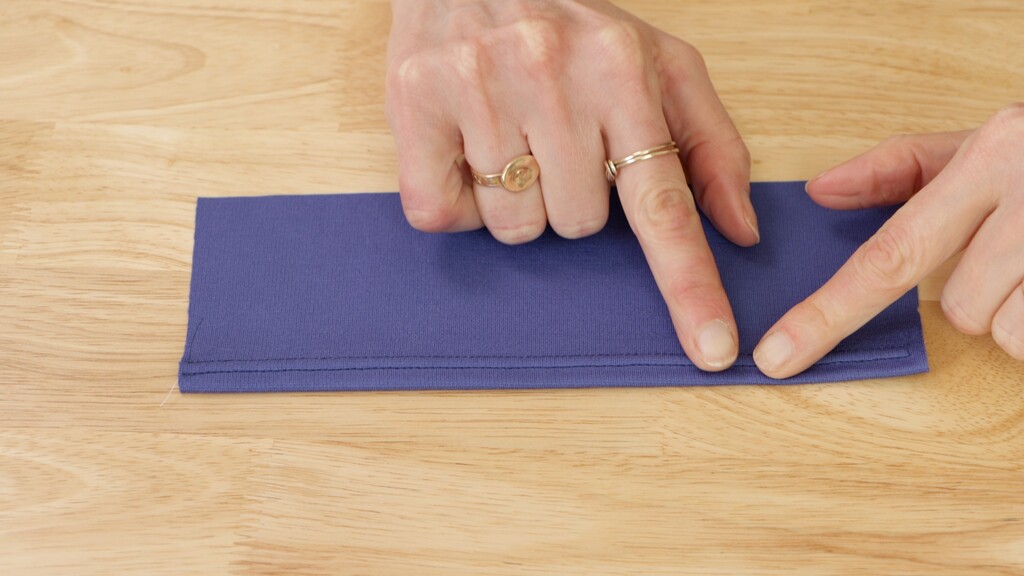
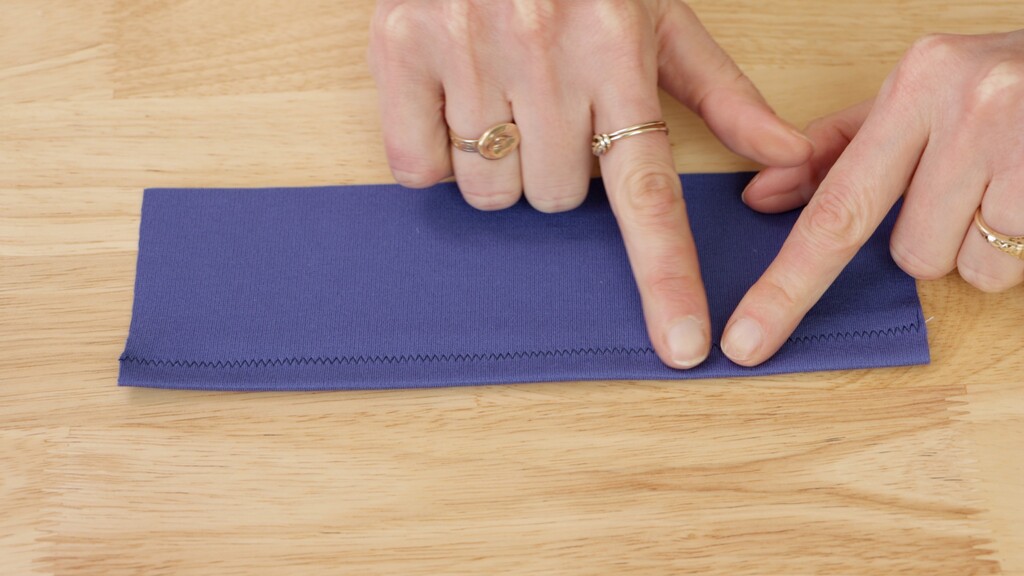
For fabrics that need more stretch, definitely use a serger or wider zigzag stitch. The key is matching your stitch choice to both your fabric and the garment's stretch requirements.
Rethink the finishing - That topstitching called for in your pattern needs a knit-friendly approach. A twin needle creates beautiful parallel lines that move with the fabric, while a coverstitch machine gives the most professional finish for hems and edges.
Five More Seamwork Patterns Perfect for Knit Conversion
The beauty of this technique is that it opens up so many more options in your pattern collection. Here are five other Seamwork patterns that are ideal candidates for knit substitution:
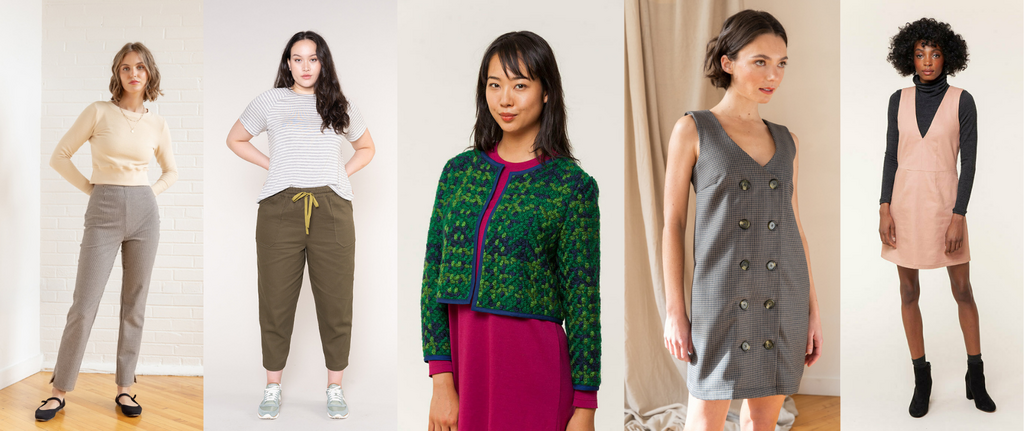
The Dani pinafore is practically begging to be made in knits. With its A-line silhouette and pullover design, you don't have to worry about closures at all. I made one in black scuba knit that I absolutely love.
The Ulla shift dress would work beautifully in stable knits. The semi-fitted bust with princess seams translates perfectly, and the V-neckline is naturally flattering in stretch fabrics.
The Lilliana jacket offers a chic, unlined silhouette that's perfect for ponte or heavy sweater knits. No closures means simple construction, and the boxy shape looks incredibly modern in the right knit.
The Witt joggers are an obvious choice - joggers just make sense in knits! French terry, double knit, or sweatshirting would all be fantastic choices.
The Lars pencil pants are already designed for stretch wovens, so swapping to a stable knit like ponte works beautifully without major adjustments.
Your Next Steps
Converting woven patterns for knits isn't just about fabric swapping - it's about understanding how stretch and structure work together to create garments you'll actually love wearing. Start with a simple pattern like the Orla or Dani pinafore, choose a stable knit, and work through each construction detail thoughtfully.
The result? A whole new category of comfortable, stylish garments that bridge the gap between loungewear and ready-to-wear. Once you master this technique, you'll find yourself looking at every pattern in your collection with fresh eyes, wondering "what if I made this in ponte instead?"
 Related Articles
 Best Articles