You've probably had this happen—you order fabric online, it shows up, and it's completely wrong. The color looks off, the texture feels cheap, or the print is way bigger than you expected. Now you can't even use it, and you're out the money and back to square one on your project.
I've been sewing for almost 30 years, and I've made pretty much every fabric shopping mistake you can imagine. Fabrics that looked beautiful online but showed up dull, stiff, or completely different in real life. But once I started paying attention to a few specific things before buying, everything changed.
Today I'm sharing the exact system I use to choose fabrics online—including small details that make a huge difference but most people completely overlook. You can order with confidence, get what you actually expect, and stop wasting money on fabric that never makes it into your wardrobe.
Start With Your Own Closet
This first tip is going to sound almost too simple, but it's the foundation of everything else: Start building your personal fabric knowledge base by investigating your own closet.
Think about the clothes you actually love wearing—the ones that feel amazing and look great every time you put them on. Take a look at those care labels and write down the fiber contents. Is that perfect t-shirt 95% cotton and 5% spandex? What about that dress you reach for again and again?
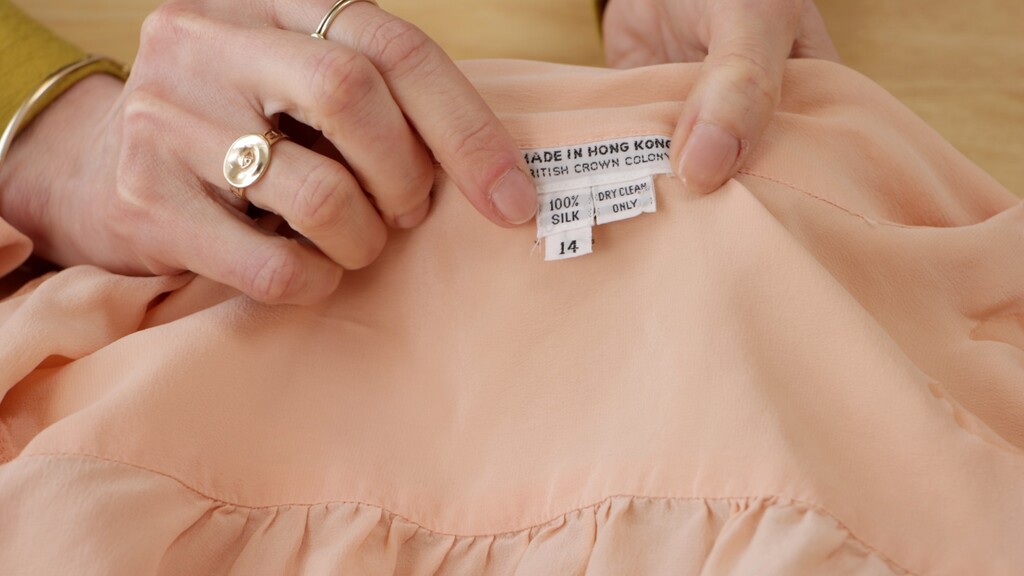
Now check something you never wear—maybe it's scratchy or doesn't move right—and note those fibers too. You're building your personal "love it" and "never again" lists that will guide every fabric purchase from now on.
This simple investigation turns your closet into your personal fabric library. This personal database becomes your secret weapon for every future fabric purchase. You'll walk into any store or browse online knowing exactly what to look for and what to avoid.
Learn to Read Fiber Content Like a Roadmap
Here's what you're really looking for when you're checking those care labels in your closet: fiber content. Whether a garment feels too hot, gets clingy in weird places, or just doesn't feel right against your skin—it all comes back to fiber content.
Understanding fiber content isn't just helpful—it determines how that fabric is going to feel on your body, behave in different weather, and hold up over time.
Natural fibers like cotton, linen, silk, and wool come from plants and animals. They're usually breathable and comfortable, they take dye beautifully creating rich colors, but they do tend to shrink and wrinkle more.
Synthetic fibers like polyester, nylon, and spandex are engineered. They're more durable, wrinkle-resistant, and often less expensive, but they don't breathe the same way as natural fibers.
Semi-synthetics like rayon, modal, and lyocell start from plant material but undergo chemical processing to become textiles. Read this article for more details about rayon and its variations: How to Sew with Rayon: Expert Tips and Inspiring Projects.
Before you shop, think about what you actually need from your fabric. Do you need maximum breathability because you run warm or live in a hot climate? Do you want something wrinkle-resistant because you travel a lot or hate ironing? Are you looking for natural fibers for environmental reasons or because synthetics feel uncomfortable on your skin?
Always Check Care Requirements Before You Buy
You can have the perfect fiber blend, but if the care requirements don't match your lifestyle, that gorgeous fabric will never actually get worn.
Ask yourself honestly before clicking buy: Will I actually hand wash this delicate silk every time it needs cleaning? Consider the costs beyond the price tag—are you okay with ironing linen after every wear or budgeting for regular dry cleaning for wool?
Even the most stunning fabric won't get worn if the upkeep doesn't match your actual routine.
Here's what to look for when shopping: "Machine washable" is your friend for everyday pieces. "Dry clean recommended" usually means you can carefully hand wash, but "dry clean only" means don't risk it.
Pay special attention to fabric blends, too. Sometimes that small percentage of a delicate fiber introduces additional care considerations. For example, a 100% cotton dress might be easy care, but add 10% silk and suddenly it needs special handling when washing and pressing.
The bottom line is it's better to match your fabric care to your actual lifestyle, not your aspirational lifestyle. Your future self will thank you when you're reaching for clothes you can actually wear and wash without stress.
Learn to Predict Weight and Drape From Visual Clues
Here's another aspect of fabric performance that's crucial to get right: drape. This one factor can make or break your finished garment, and unfortunately, it's also one of the trickiest things to predict when shopping online.
Weight is pretty straightforward—it's literally how heavy the fabric is per square yard. Lightweight fabrics are usually under about 7 ounces, heavyweight fabrics are over 11 ounces, and medium weight falls in between. Many sites list this information, and if they don't, you can often request it.
Drape describes how the fabric hangs on your body—how it falls and folds. The more drape a fabric has, the more it will follow your body's contours without being clingy or looking stiff. Rayon challis and silk are perfect examples of fabrics with beautiful drape.
Less drape means more structure—the fabric will hold its own shape and create silhouette independent of your body. Think of a sturdy pair of jeans or a tailored blazer.
When you're reading descriptions, look for keywords. For good drape, look for terms like "fluid," "flowing," "soft," "falls beautifully." For structure, look for "crisp," "tailored," "body," "holds its shape."
Focus on Recovery as Much as Stretch Percentage
If you've ever worn leggings or a fitted dress that started the day looking great but gradually became saggy and shapeless, you've experienced the difference between stretch and recovery.
Understanding stretch percentage is only half the equation—recovery is what determines whether your garment will maintain its shape. That saggy, shapeless feeling happens when fabric has stretch but no recovery to pull it back into place.
Since you can't physically test recovery online, the secret is looking for spandex or elastane content in the fabric description. For everyday garments that need some stretch, look for 3-5% spandex content. For activewear that must hold its shape through serious movement, you'll want 8-15% spandex content.
These percentages give you a baseline, but remember that closet investigation from tip one? Apply it to your knits to discover what spandex percentages actually work for your body and wearing habits.
Look at All Available Photos, Not Just the Main Image
We've all made the mistake of trusting that one beautiful cover photo, not realizing it might be styled, edited, or shot under specific lighting that doesn't represent reality.
Scroll through every single photo in the listing. Look at the fabric from different angles, in different lighting situations, against different backgrounds. Fabric can look completely different depending on whether it's photographed under warm tungsten lights or cool daylight.
Pay special attention to any photos that show the fabric in natural light or against neutral backgrounds. These are more likely to show you accurate color and texture. If there are multiple color options shown together, that can help you judge the true tones.
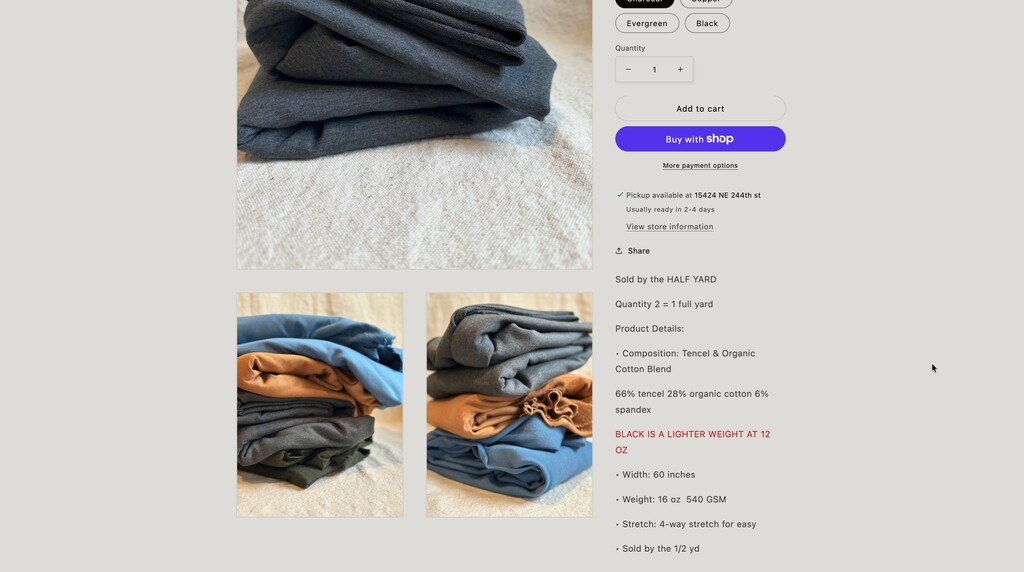
Some listings include detail shots that show the fabric's surface texture or weave structure up close. These might not be as pretty as the styled shots, but they're incredibly valuable for understanding what you're actually buying.
Learn to Accurately Assess Print and Texture Scale
Without good scale reference points, you might order a fabric with a print that looked perfectly sized in the photos, only to have it arrive with motifs that are way larger or smaller than you expected.
Look for any photos that include reference objects—coins, measuring tape, rulers, or hands holding the fabric. These are gold for judging actual scale.
Some listings will actually tell you the dimensions of print motifs in the description. If it says "flowers are approximately 3 inches across," try to visualize that scale. It might help to measure out 3 inches on a piece of paper or use your fingers as a rough guide.
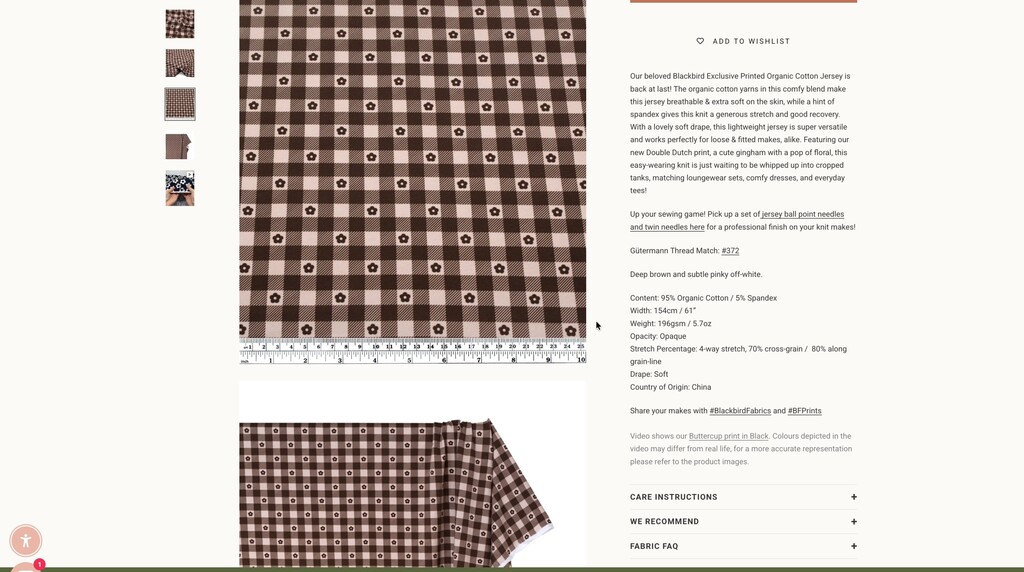
When there's no scale reference, try zooming in on the fabric photos. Sometimes you can see individual threads or weave structure that gives you clues about the actual size of print elements.
Know When Swatches Are Worth It
Here's my rule of thumb: If you'd be genuinely upset wasting the money if the fabric doesn't work out, get the swatch.
Those few dollars either confirm a great choice or save you from an expensive mistake. Most stores offer swatches for a small fee, and many offer them free with loyalty programs.
When your swatches arrive, test three crucial things:
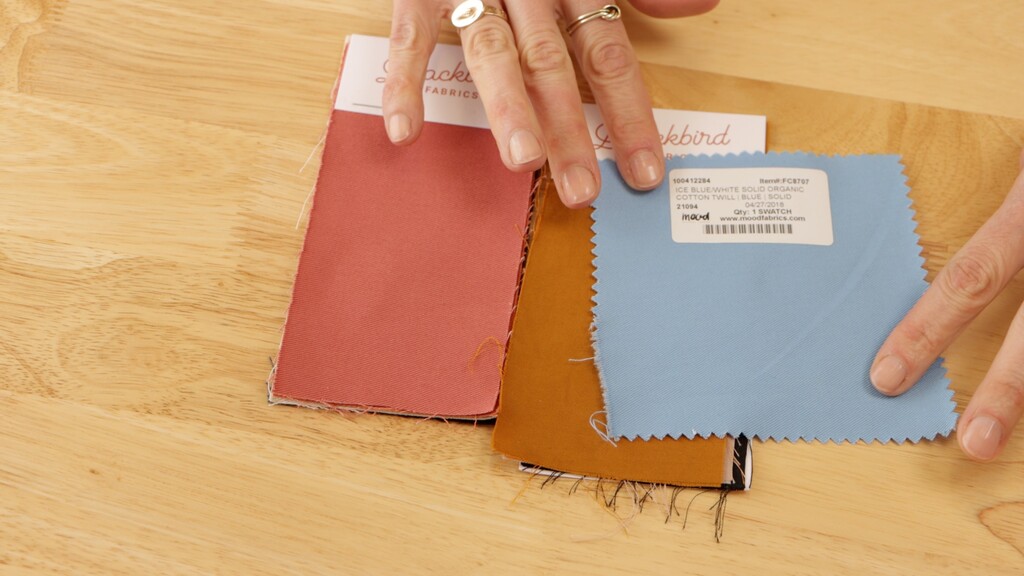
First, color accuracy. Hold them up to different lighting throughout your house—near a window during the day, under your sewing room lights, in your bedroom where you'll probably wear the finished garment.
Second, hand feel and texture. This is information you simply cannot get from photos. Is it soft or scratchy? Does it have a smooth surface or interesting texture?
Third, weight and drape. Hold the swatch up and let it hang—does it fall softly or does it stick out stiffly? Drape it over your hand or arm to get a sense of how it will behave when you're wearing it.
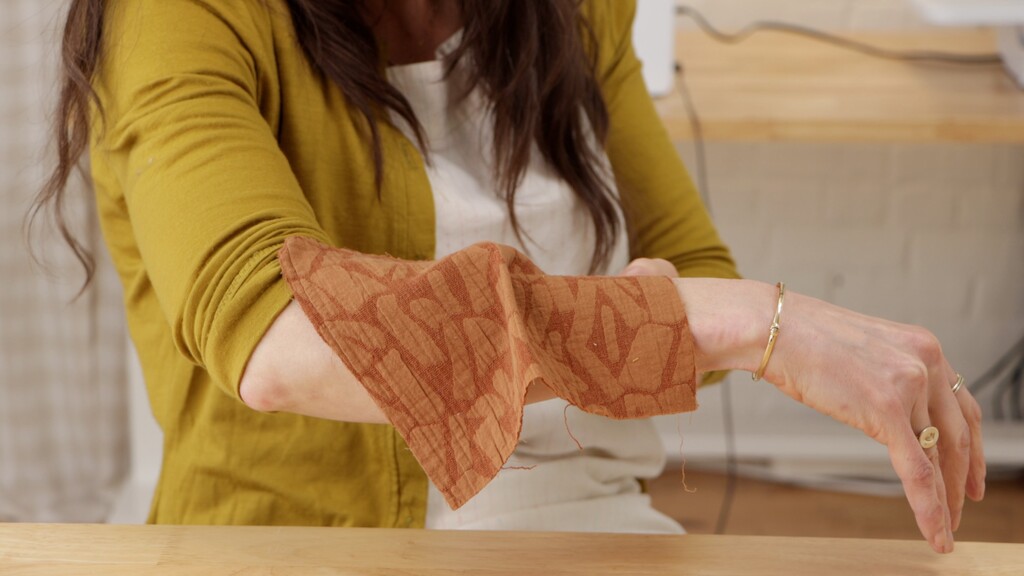
Use swatches to compare different options side by side. Take notes about each one—this builds your fabric knowledge for future shopping.
Read Reviews for Objective Information
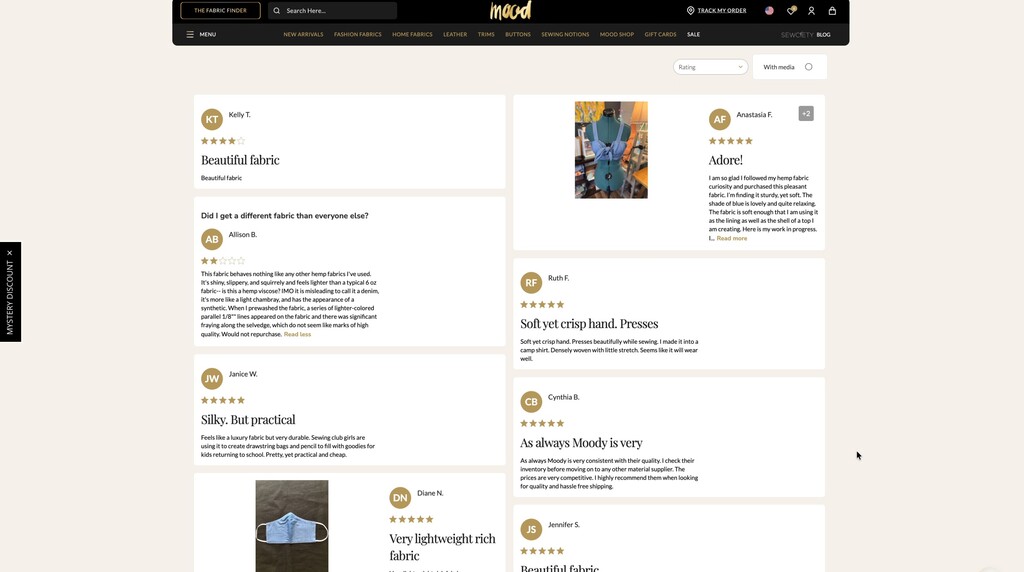
Focus on consistent factual feedback rather than personal preferences. Look for comments about things like color accuracy—if multiple people say "much more orange than expected" or "darker than the photos show," that's probably reliable information.
Pay attention to reviews that mention practical details: Does it fray excessively? Is it more or less opaque than expected? How does it behave when washed? Does it pill easily?
Reviews from sewists who made similar projects to yours can be super helpful too. If you're planning a dress and someone made a dress from the same fabric, their experience is much more relevant than someone who used it for a structured blazer.
Understand Return Policies Before You Commit
Make it a habit to check the return policy before you add anything to your cart. Some stores are very flexible, others have strict no-return policies because fabric is considered a custom-cut product.
Don't be afraid to contact the store directly if you have questions. Most fabric store owners are sewists themselves who genuinely want to help you succeed with your project. Ask about hand feel, drape, or whether a fabric is appropriate for your specific use.
Keep track of your fabric purchases—whether it's a simple spreadsheet or notes in a notebook. Record the fabric type, weight, color, price, and your experience with it. This makes it much easier to learn from both your successes and mistakes.
Put Your New Skills to Work
Now that you know how to choose fabrics online with confidence, you're ready to start building that handmade wardrobe you've been dreaming of. These skills work whether you're shopping for a simple tee like the Orlando pattern or planning something more complex like the Taylor wrap dress.
Remember, every expert sewist started exactly where you are now. The difference is developing systems that work for you and trusting your growing knowledge base. Your closet investigation, combined with these shopping strategies, will serve you well for every fabric purchase ahead.
What's been your biggest fabric shopping challenge? I'd love to hear about your experiences—both the wins and the learning moments.