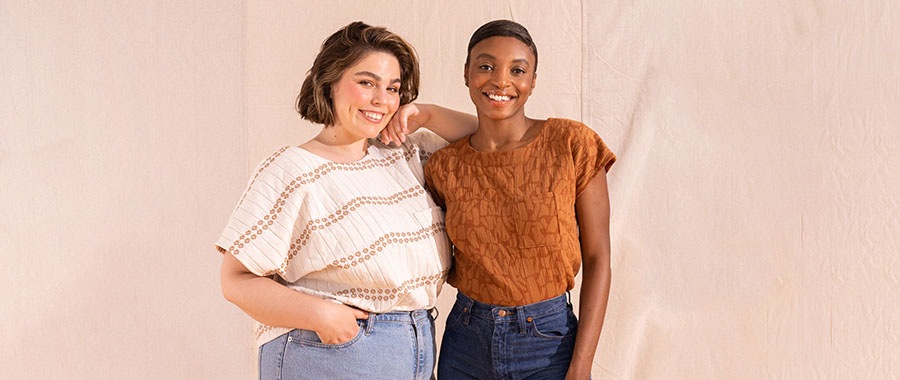
The Greer Sewalong is a step-by-step video series designed to guide you through sewing the Greer, from choosing your size to finishing the final details.
In this sewalong, we walk you through each stage of the process in short, focused lessons. You can move through the videos at your own pace, pause as needed, or skip ahead if you’re already comfortable with certain steps.
Greer is a timeless, figure-hugging knit dress with an ankle-skimming length that keeps you feeling comfortable and effortlessly chic. With its trumpet skirt and subtly flared sleeves, Greer offers a unique silhouette that adds a touch of drama while still being incredibly wearable.
The neckline features a relaxed mock neck for a modern, polished look, while the fitted shape through the bust, waist, and hips celebrates your curves.
The member bonus converts Greer into a sleek skirt with hidden elastic waistband.
To follow along, you’ll need the Greer Pattern. Seamwork members can download it as part of their membership, and non-members can purchase it individually in the shop.
Getting Started
Fabric recommendations:Choosing a knit fabric with the right amount and stretch and good recovery is really important for Greer. Look for medium-weight knit fabrics with 4-way stretch and at least 50% stretch, such as cotton jersey, bamboo jersey, rib knits, and ITY knits.
Fabric qualities to look for: When you are shopping for fabric pay most attention to the stretch and drape of the fabric. This pattern requires 50% stretch as it is very fitted to your body.
If you prefer a more structured, stable knit, look for one with less drape, and make sure it has good recovery. Cotton jersey is a good option as long as it has at least 5% spandex and good recovery.
If you prefer more of a swinging silhouette, choose a fabric with more drape. Look for blends that include rayon, bamboo, or viscose, or opt for a sweater knit that has some spandex.
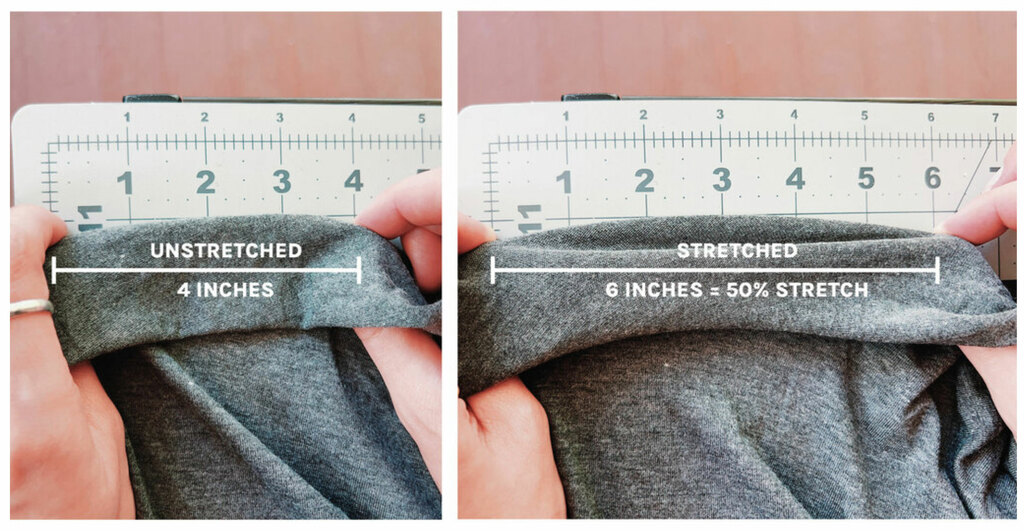
Many fabric shops will list a stretch percentage for a fabric. This percentage tells you how much the fabric can stretch beyond its original length.
For example, if a fabric has 50% stretch, it means that a 10-inch piece of fabric can stretch an additional 5 inches.
How to Determine Stretch Percentage in Fabric Unsure if your fabric has the right amount of stretch? In this quick video, you'll learn a formula for calculating your fabric's stretch percentage, so you'll know if it's right for your next knit garment.
Spandex—sometimes called elastane—is an important fiber for your knit fabric because it provides the elasticity needed for stretch and recovery.
Recovery means that the fabric will not only stretch to fit your shape but will also bounce back to its original form without sagging.
An ideal spandex percentage for good recovery in a knit fabric is typically between 3% and 8%. You’ll have enough elasticity for the fabric to stretch comfortably while ensuring it snaps back into shape.
Don't Forget! Seamwork members, take advantage of your member deals this month! You can save up to 20% off your order here.
Prepare to Sew
This lesson covers all the basic things you need to know to get started with this sewalong. If you’re a beginner, this will be really helpful to watch!
If you feel like you already know how to get your pattern and fabric ready for sewing, go ahead and skip to the next lesson and you'll learn to do some helpful fitting adjustments.
You're going to learn how to:
- Select a pattern and reference its skill level
- Select a size
- Prepare patterns and fabric
- Cut and mark fabric
Fitting Adjustments
The Greer features a fitted shape through the bust, waist, and hips. To make sure the curves of the pattern meet the curves of your body, you can lengthen or shortening the pattern.
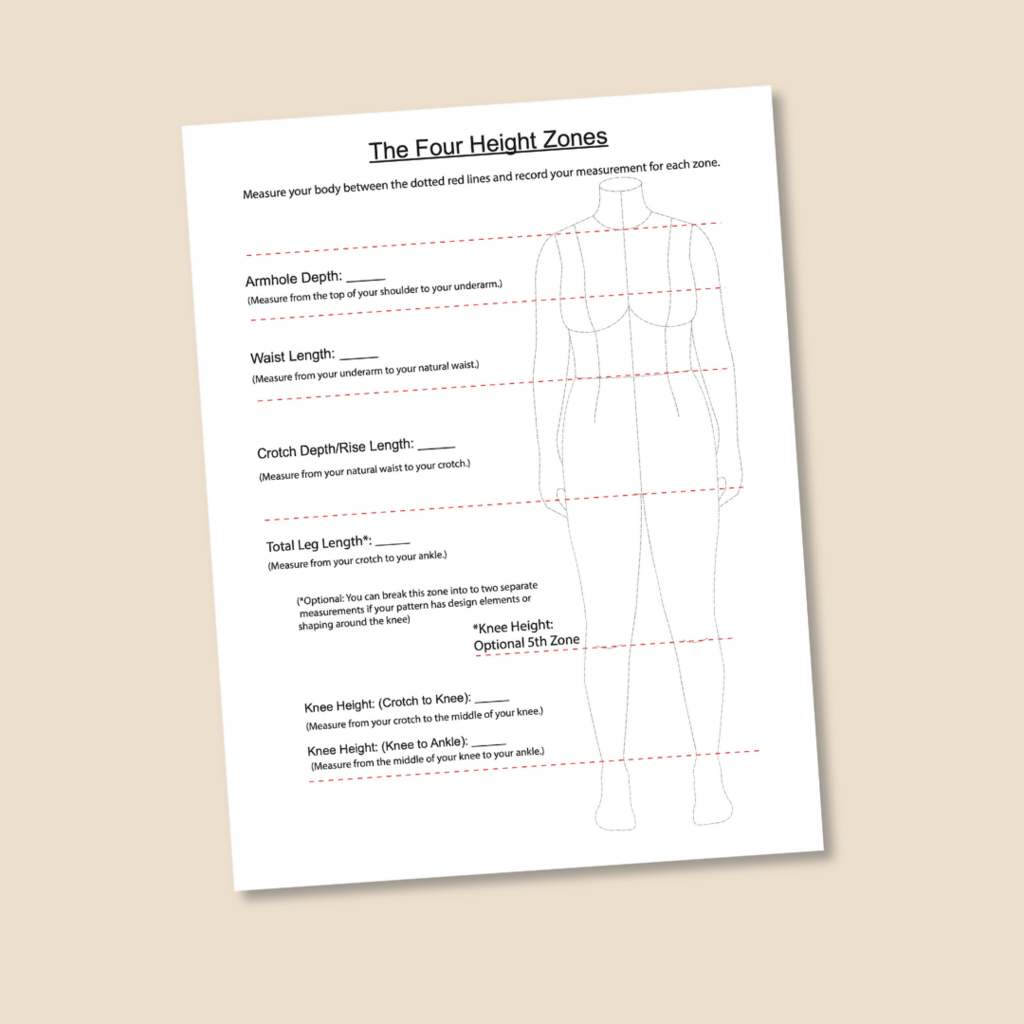
We created a free downloadable PDF called the Four Height Zones to help you gather the information you need to make adjustments to your pattern where you need it. We recommend printing it out and writing your height measurements on it to keep in your sewing journal.
Compare these measurements to the corresponding landmarks on your pattern pieces, and you’ll know how much you need to shorten or lengthen that part of the pattern.
Fitting tutorials:
- Follow this tutorial to lengthen and shorten a sewing pattern.
- If you need to adjust the armhole depth, use this tutorial.
- If you want to blend between sizes, use this video tutorial.
- To adjust the shoulder slope, follow this tutorial.
- Here are fitting tutorials for the shoulders and sleeves.
- Here are tutorials for wide or narrow shoulder adjustments.
- Here are tutorials for small bust adjustments and full bust adjustments.
- If you prefer videos, there are bust adjustment videos in the Hansie sewalong here.
- Read this article for tips for perfectly fitting knits.
Sewing Instructions
The PDF instructions will be your main guide as you work through this pattern, but we've created this video to walk you through the trickiest steps in detail. If you need help on a step not shown in this video, check out the Community Group Sew, where other Seamworkers and staff are ready to help out!
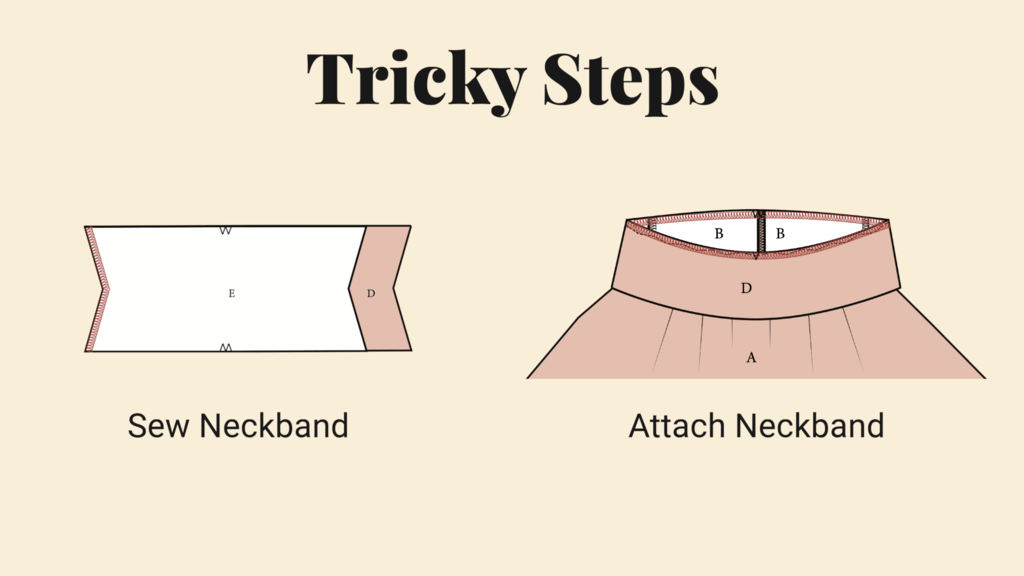
The trickiest steps for this pattern are:
Don't have a serger? No worries! You can sew Geer entirely on your regular machine using the tips in this video.
Thinking about using a coverstitch to hem your Geer? This video will teach you what a coverstitch machine does, how to create a flat hem and hem in the round, and some troubleshooting tips and tricks.
Reinforce your shoulder seams. This video will show you how to avoid stretched out shoulder seams.
The video from the Orland Sewalong will show you how to insert the sleeves.
 Related Articles
 Best Articles